
Proclamation, Welcome, and Accompaniment
The first of two essays summarising a talk I gave recently at a conference in Rome

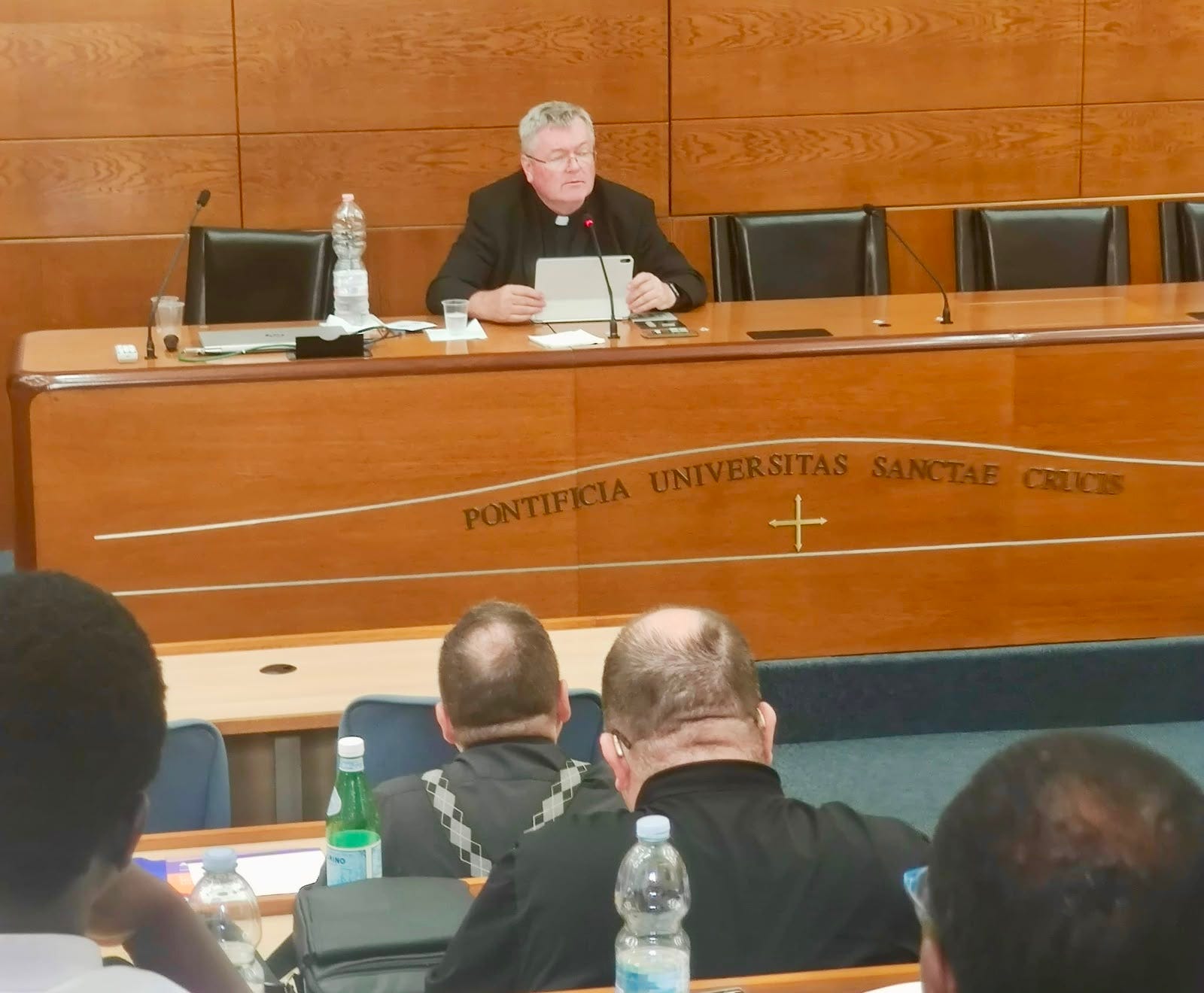
Proclamation, Welcome and Accompaniment
As the parish priest of St Elizabeth’s, a medium-sized parish in south-west London, I have had the privilege in recent years of witnessing an unprecedented number of young adults requesting Baptism or seeking reception into the Catholic Church. I also serve as a coach with the Divine Renovation Network, accompanying priests from around the world as they seek to renew the Christian life of their parishes. They too speak of a growing number of young adults attending Mass in their parishes.
It is a phenomenon that last year was dubbed “the Quiet Revival” and hailed as a significant moment of renewal in Christianity in the United Kingdom. It attracted a great deal of international media attention and we found ourselves responding to questions from British journalists as well as French and German outlets. Again and again we were asked not just whether it was true but, more interestingly, if it was, why did we think it was happening?
The methodology behind the Quiet Revival Report has since been questioned, but the increased interest among young adults is not something we have needed a report to notice. What perhaps distinguishes our experience is not the increase itself so much as the pastoral reflection it has prompted. It is the fruit of that reflection I want to share here, in the hope that it will encourage other parishes to consider how well prepared they are to welcome the “unchurched” into their communities.
Before turning to that reflection, though, there is a question we must ask ourselves with complete honesty: What would someone actually experience when they walk into your church for the first time? I remember being asked to help with First Confessions in a nearby parish. It was bitterly cold and I was wrapped in an overcoat and scarf. I hadn’t been there before and didn’t know where the sacristy was, so I approached a group of three people in the narthex. Perhaps I looked like a man of the road because my “excuse me” was met by an irritated, “What do you want?”. I loosened the scarf to reveal the collar and immediately it became, “Oh Father, what can I do for you?”. Every parish likes to think of itself as welcoming and friendly. But what is it like for an outsider visiting our churches? I fear that many parishes are perfectly designed to serve the needs of familiar and well-established parishioners. I wonder how many are really oriented towards the needs of the outsider?
At St Elizabeth’s we try to be intentional about welcoming visitors and newcomers. Unsurprisingly, time and again we discover that many young adults come to us with little knowledge of Christian doctrine, the Church’s moral teaching, or sacramental life. Yet often they come with open hearts. They have come because they are searching for something more.
Sometimes they may not be able to articulate what exactly they are looking for but over time we have come to recognise a pattern that very much reflects a universal human experience. First, everyone is searching for love. Am I truly loved? Is there someone who knows me completely and still loves me? And, increasingly: Am I even loveable? Then, people are searching for belonging. It is why we hear so much these days about “communities” — the gay community, the Black community, the deaf community. They ask: Where do I fit in? Is there a community where I am accepted and can be myself? Finally, people are searching for purpose. The questions they ask are: Why am I here? Does my life have any meaning? Can I make a difference? As a church we need to see beyond the label and to recognise that these three great universal human longings find a unique answer in Jesus Christ: in his love, in his Church, and in his mission.
Love is revealed supremely in Jesus’ self-giving on the Cross, and it is experienced through the power of the Holy Spirit in prayer and sacramental grace.
Belonging is found in the Church, not simply as an institution but as a community, a fellowship. Here people discover that they are loved, and because they are loved they are free to be themselves: honest, vulnerable and also confident that they will be received and supported.
And purpose is found in embracing Christ’s mission by living an authentically missionary discipleship—an apostolic life capable of transforming the world.
The question we must therefore ask is this: How do we ensure that those who come to us from outside can encounter in Christ the answer to these deepest longings, in a way that reaches their hearts and transforms their lives?
I would like to suggest that we need to evaluate three things happening in our parishes if we want the needs of the outsider to be taken seriously — three things that determine whether a newcomer is led on a journey in which they can encounter Christ, grow as his disciple, and be equipped to lead others to do the same. These three factors are Proclamation, Welcome, and Accompaniment. In this essay and the two that follow, I want to consider each of these in turn: how do we proclaim Christ in a culture shaped less by ignorance than by apathy; how can our welcome can reveal the heart of God to the stranger; and how might accompaniment turns visitors into disciples who are themselves able to accompany others.
1. Proclamation
The first of these three dimensions is proclamation, for it is here that the deepest human longings first encounter the answer offered by the Gospel. If love is revealed supremely on the Cross, proclamation is the moment a parish first speaks that love aloud — the point where someone is invited to discover that they are loved.
Yet it is also here that we frequently make a fundamental mistake: we confuse evangelisation with catechesis. How often have we heard priests lament the poor standard of catechesis in our parishes or the inadequacy of religious education in our schools? Most priests spend at least six or seven years studying before they are ordained. In many ways teaching comes naturally to us. We have been trained to teach. Yet perhaps it is worth recalling the old story of the professor who asked his students,
“What is the difference between ignorance and indifference?” One student replied, “I don’t know... and I don’t care”.
The real challenge we face is not ignorance. It is reaching the heart of someone who has ceased to care.
For this reason the kerygma must always precede moral instruction or catechesis. Young adults today do not simply need more information or better teaching. Before anything else, they need to be evangelised. The greatest problem of our age is not ignorance but apathy. That changes the very nature of proclamation. It is not enough to fill minds with information. The Order of Christian Initiation of Adults explains this with the following words: “From evangelisation, carried out with God’s help, arise faith and initial conversion, by which each person feels called away from sin and into the profound mystery of divine love” (OCIA, par. 37).
As we break open the Gospel we must seek to answer those three great human longings: helping people discover that their lives have meaning, that they are deeply loved, and that there is a place where they truly belong. That is a very different task from teaching and it demands a different way of preaching.
For many years, whenever a major feast such as Christmas or Easter approached, I devoted enormous time to preparing homilies that carefully married the whole history of salvation with the doctrine of that day’s celebration. I believed I was making the most of a unique opportunity to teach the faith to those who came to church only on those occasions. Looking back, I doubt I succeeded in bringing more than a handful of people back to Sunday Mass. I wonder how many priests have been left disheartened by a similar experience?
In the Church’s tradition, preaching is understood as the authoritative handing on of what we ourselves have received—not merely information, but a saving reality. The Fathers consistently present preaching as a sacramental moment: the Word proclaimed is an event in which Christ himself speaks to his people. St. Augustine famously taught that the preacher is the voice, but Christ is the teacher within.
The purpose of preaching, therefore, is not simply to instruct. It is to awaken conversion, foster holiness and build communion. It is a pastoral act through which the Word of God becomes living and active in every generation. That is precisely why the homily within the Mass belongs to the ordained ministry.
Seen in this light, the most common weakness in our preaching becomes immediately apparent. We use the homily to explain the faith when, in reality, we have been called to proclaim it. We have all heard homilies that sounded more like a seminary lecture than a passionate proclamation of Jesus Christ. It is far easier to communicate information than to facilitate an encounter. It asks much less of the preacher. But our task is not to tell people about God; it is to help them encounter him. Rather than imparting information, the objective is to facilitate transformation. In other words, we are not simply sharing knowledge; we are opening a path by which grace may transform a human life.
Another common mistake is to use the homily to try to change people’s behaviour. Paradoxically, this often achieves precisely the opposite. If our principal aim is to correct behaviour, we risk driving people away entirely. I remember a neighbouring parish that ran a series of homilies warning parents of the dangers of the Harry Potter books. The only obvious result was that many young families began attending another parish instead.
In the Great Commission, Jesus does not simply say, “Teach them my commandments”. He says, “Teach them to observe all that I have commanded you”. That is so much more demanding, and it is only possible when people discover in Jesus Christ a joy greater than anything the world can offer. Our challenge, then, is not simply to change what people do. It is to change what people want to do. We should be able to say, with complete conviction, “Look how beautiful God is. Look how beautiful the Gospel is. It is worth building your whole life upon this beauty”.
To proclaim Christ in this way requires us to enter into people’s hearts and souls. We need to understand what they take pleasure in, what they long for and what awakens their hopes. We must preach Christ so compellingly that God becomes so great, so beautiful and so captivating that every rival allegiance begins to lose its hold: wealth, pleasure, prestige, power, or whatever idol claims the human heart.
That is why we must preach to the heart. Teaching enlightens the mind; preaching seeks to move the heart. A young adult who has never been convinced that he or she is deeply loved and possesses immeasurable worth in the eyes of God, will not be drawn to Christ simply through better catechesis. What they need is an encounter with Christ, and the grace to be transformed by him.
Our task then is not simply to persuade people to change behaviour. It is to cooperate with grace in the reordering of the human heart, so that people come to desire what is good and to love what is truly worthy of love. We know from ordinary human experience that fear and information alone rarely achieve this. Graphic images of diseased lungs on cigarette packets may warn someone of the dangers of smoking but falling in love with someone who cannot bear the habit often provides a far more powerful reason to give it up. We are changed most deeply not simply by what we know, but by what and whom we love. In the end it is our loves that shape our lives.